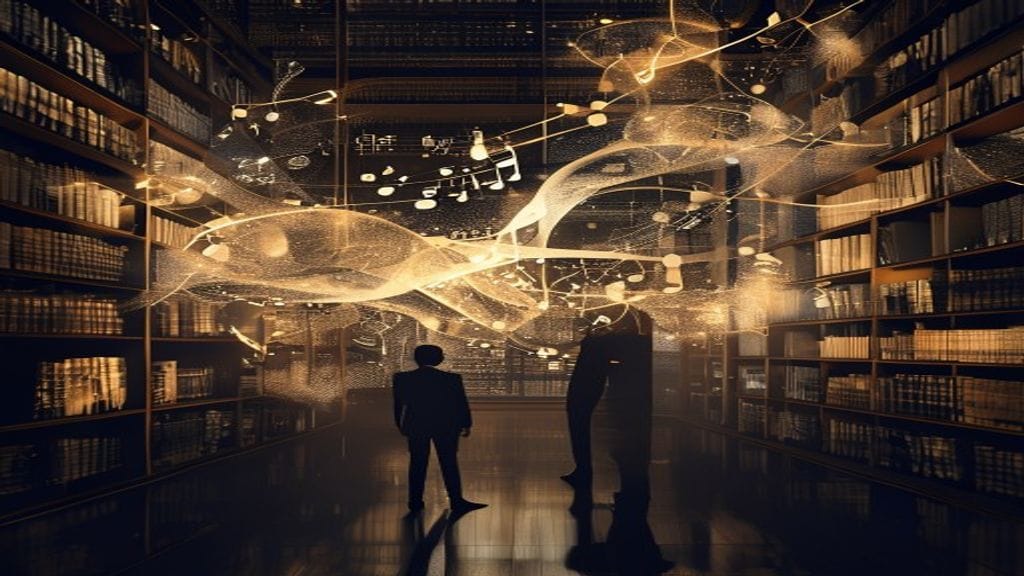
AI is not just a tool. It is a new literacy — one that expands human creativity, compresses the distance between imagination and execution, and changes who gets to build.
TL;DR
Most people still think AI is a tool. That is the wrong frame. Tools help you do something faster. Literacies change what you are able to think, see, and make. That is what AI is becoming: a new literacy, and the people who learn it early will not just become more productive. They will become more creative, more independent, and more capable of turning inner possibility into outer reality.
Key Insights
- AI is not just automation. It is a new way of thinking with language, structure, and possibility.
- Tools improve efficiency. Literacies expand human range.
- The real divide will not be between technical and non-technical people, but between those who learn to think with AI and those who do not.
- This shift does not reduce human creativity. It dramatically lowers the distance between imagination and execution.
- The deepest question is not whether AI can replace us, but whether we are willing to grow into the new capacities it makes available.
For the past year, I have been watching people talk about AI in a way that already feels outdated.
They talk about prompts. They talk about productivity. They talk about whether ChatGPT writes emails faster, whether Claude helps with code, whether some model can save a few hours per week. The whole conversation is framed as if AI were just another tool in the software stack — impressive, useful, but ultimately in the same category as Excel, Photoshop, or Google Search.
That is not what I am experiencing. What I am experiencing feels much closer to literacy. That may sound like an exaggeration. It is not.
A tool helps you perform a task. A literacy changes the structure of your mind. It gives you a new interface to reality. It expands the kinds of thoughts you can stabilize, the kinds of patterns you can notice, and the kinds of creations you can bring into the world.
Writing did that. Mathematics did that. Programming did that. AI is beginning to do the same.
And once you see it clearly, you also see the mistake in almost all mainstream commentary. We are treating a civilizational shift in human capability as if it were a software upgrade.
It is much bigger than that.
What a Literacy Actually Does
A literacy does not simply make you faster. It changes who can participate.
Before writing, knowledge had to be memorized and embodied. Before printing, literacy remained narrow and elite. Before the internet, publishing required institutions. Before coding became broadly accessible, software remained in the hands of specialists.
Each literacy widens the circle of agency. That is why this moment matters.
AI is doing for creation, synthesis, design, analysis, and execution what literacy once did for memory and communication. It is allowing far more people to work at a level that used to require years of technical training, institutional permission, or large teams.
That does not mean expertise disappears. It means the floor rises.
It means the distance between “I have an intuition” and “I can build something real from it” collapses.
That is the shift.
The people who learn to work with AI as a genuine cognitive partner will not just get more done. They will begin to operate differently. They will think in larger loops. They will test ideas faster. They will create across disciplines. They will become harder to categorize by old professional identities.
And everyone else will still be debating whether it is cheating.
What This Looks Like From the Inside
I do not say this as an observer. I say it because it is happening to me.
I have started a book. I have published a dance album on Spotify. With AI, I have helped create certified software for accountants. These are not adjacent hobbies. They belong to different worlds: writing, music, software, business.
In an older era, each of those would have demanded a different gatekeeper, a different team, or a different identity.
You were either the writer, or the musician, or the entrepreneur, or the software builder. You might move between those worlds over a lifetime, but not fluidly, and certainly not at speed.
AI changes that.
Not because it “does the work for you.” That is the shallow interpretation. It changes that because it lets you stay in the seat of vision while massively increasing your ability to shape, test, refine, and express what you already carry inside you.
That is a very different thing.
I am not becoming less human in this process. I am becoming more capable of acting on what is human in me.
That distinction matters.
The fear around AI is often framed as a fear of replacement. I understand that fear. Some tasks will absolutely be automated. Some skills will absolutely lose market value. That part is real.
But there is another side to this that is still badly underappreciated: for many people, AI is not first experienced as replacement. It is experienced as release.
Release from friction.
Release from bottlenecks.
Release from the tyranny of needing ten years of formal training before you are allowed to make something that matters.
For the first time, a huge number of people can move from idea to artifact with dramatically less loss in translation.
That is not a minor improvement. That is a new literacy.
Why This Changes Creativity
Most people still imagine creativity as something rare and fragile.
A talent. A gift. A mysterious substance possessed by artists, founders, inventors, and a few lucky outliers.
There is truth in that view, but only partial truth.
What we call creativity is often trapped potential. It is the combination of sensitivity, pattern recognition, courage, and execution. Many people have the first three. Very few have historically had access to the fourth at scale.
That is why so many human beings have lived and died with worlds inside them that never became visible.
AI changes this by turning execution into a far more accessible partner. If you can think, you can prototype. If you can feel something clearly, you can articulate it. If you can see a pattern, you can test it.
If you can imagine a product, a song, a workflow, a business, an essay, or a system, you are now much closer to giving it form.
This does not eliminate the need for taste. In fact, it makes taste more important. When execution becomes easier, discernment becomes rarer.
When anyone can generate output, the real differentiator becomes whether you know what is worth making, what is true, what is beautiful, what is coherent, what should exist at all.
That is why I do not believe AI will flatten human creativity into sameness. I think it will do something more interesting. It will expose the difference between people who merely want output and people who are in genuine relationship with reality.
The first group will use AI to produce noise faster.
The second will use it to bring deeper signal into the world.
The New Divide
This is where the literacy frame becomes urgent.
The great divide of the coming decade will not simply be between rich and poor, or technical and non-technical, or educated and uneducated in the traditional sense.
It will be between those who learn to think with AI and those who continue to treat it as external. That divide will show up everywhere.
In business, some people will still use AI to summarize meetings. Others will use it to redesign how work happens.
In education, some will use it to cheat on assignments. Others will use it to accelerate genuine understanding.
In creativity, some will use it to flood the world with generic content. Others will use it to finally express what had been trapped inside them for years.
In entrepreneurship, some will wait for permission. Others will build.
This is why the literacy analogy matters so much. When a new literacy emerges, neutrality becomes difficult. You do not remain untouched by it. You either enter it, resist it, or get shaped by systems built by those who did enter it.
And like every literacy before it, early adoption compounds.
A child who learns to read early does not simply read books sooner. That child enters a different relationship with thought. The same is true here.
Someone who learns how to think with AI today is not just gaining a temporary productivity edge. They are building a new cognitive posture. They are learning how to work with recursive feedback, fast iteration, synthetic breadth, and amplified execution.
That posture will matter far more than any single tool. The models will change. The interfaces will change. The pricing will change. The companies will change. The literacy will remain.
The Human Question Beneath the Technical One
There is also a deeper layer here, and it is the one that interests me most. Every major technological leap eventually becomes a mirror. It does not only change what we can do. It reveals what we are.
AI is revealing something uncomfortable and beautiful at the same time: much of what we called talent was partly trapped capacity. Much of what we called specialization was partly a response to friction. Much of what we called impossibility was really inaccessibility.
Now that the barriers are falling, a new question appears.
Who are you, when more becomes possible?
If the machine can help you write, compose, code, design, analyze, and build, then the bottleneck shifts inward. The question is no longer only whether you have the technical means. The question becomes whether you have the clarity, honesty, courage, and taste to use them well.
Technology externalizes certain forms of intelligence. What remains irreducibly human is orientation.
What do you serve?
What do you notice?
What do you choose?
What do you bring into being?
That is why I do not see AI as the death of human meaning. I see it as a pressure test.
It forces us to confront the difference between having tools and having direction. Between producing more and perceiving more. Between generating content and expressing truth.
The people who flourish in this era will not be the people who merely learn to operate the machine.
They will be the people who know what they are here to do with it.
Conclusion
AI is not just another tool. It is a new literacy.
And like every literacy before it, it will reorder status, creativity, work, education, and power. It will make some old skills less valuable. It will make some human capacities more valuable. It will reward people who learn early, think clearly, and act with courage.
Most of all, it will widen the circle of those who can turn inner life into outer form.
That is why I am optimistic.
Not naive. Not blind to the disruption. Not dismissive of the costs.
But optimistic.
Because I am already seeing what happens when a person with vision gains a new language for execution. A book begins. An album gets released. A company gets built. An idea stops waiting for permission and enters the world.
This is not the end of human creativity.
It is the beginning of a far more distributed version of it.
The real question is not whether AI can think.
The real question is whether we are ready to become more fully articulate beings in its presence.
Thrilling times.