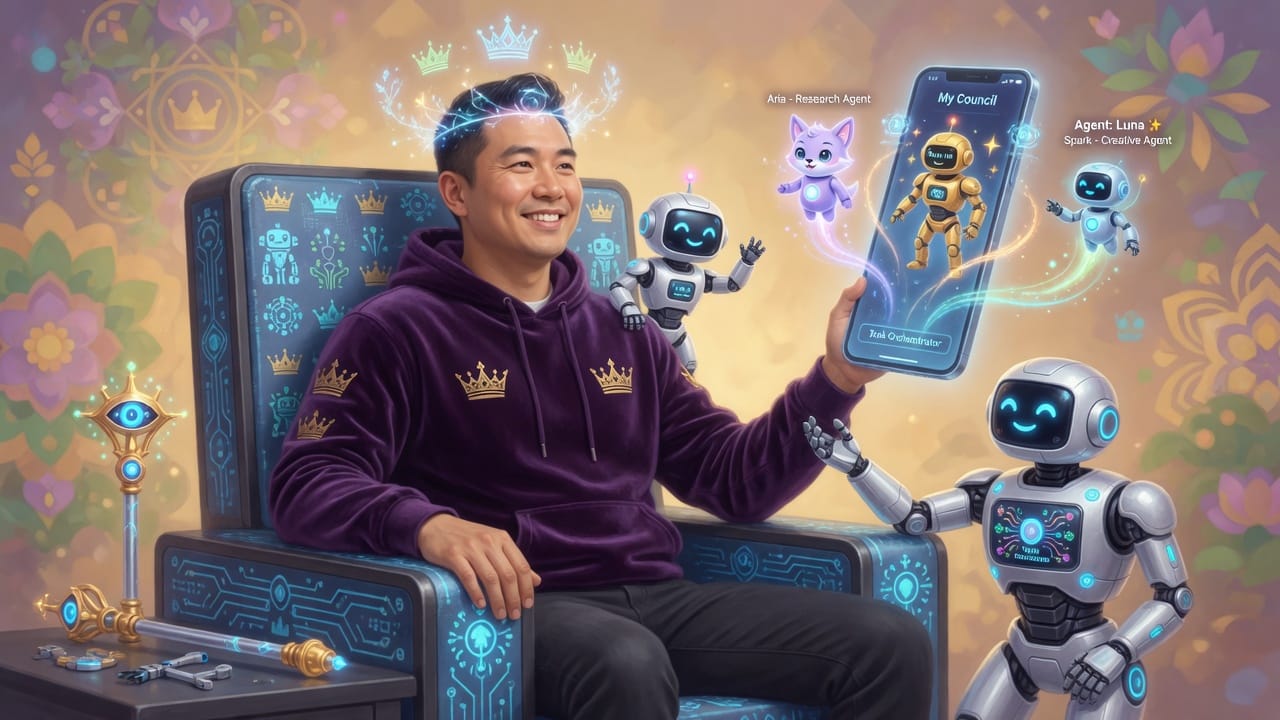
The Rise of the Agents TL;DR Pioneers like Peter Steinberger’s OpenClaw have shown us the truth: AI agents aren’t just tools—they’re companions. While businesses chase Claude for coding, we’re building loyal buddies that remember you, anticipate needs, write code, and coach your decisions. The early “glass-chewing” phase is brutal, but it’s giving way to wise, always-on servants. The catch? Cost. Fortunately, powerful and affordable models like Grok 4.1 Fast are here. Get an agent. Start living
The Rise of the Agents
TL;DR
Pioneers like Peter Steinberger’s OpenClaw have shown us the truth: AI agents aren’t just tools—they’re companions. While businesses chase Claude for coding, we’re building loyal buddies that remember you, anticipate needs, write code, and coach your decisions. The early “glass-chewing” phase is brutal, but it’s giving way to wise, always-on servants. The catch? Cost. Fortunately, powerful and affordable models like Grok 4.1 Fast are here. Get an agent. Start living like a king.
Key Insights
• The Buddy Threshold: For the first time, AI truly knows you. It remembers your context, anticipates your needs, and acts independently. No more endless explanations—just ask, and it reprograms itself, clears your inbox, or coaches your next move.
• Pioneer Pain: Nothing works perfectly yet. Integrations break, models glitch, and even the best systems (like Claude Opus) stumble. But when everything finally clicks, you cross an invisible threshold into constant, ambient intelligence.
• Token Economics: Running a 24/7 agent on premium LLMs gets expensive—easily $200+/month. While Anthropic and OpenAI chase big enterprise deals, Chinese models (DeepSeek, Kimi, MiniMax) and xAI’s Grok deliver serious agent-grade performance at accessible prices. Grok 4.1 Fast brings sharp reasoning at Chinese-model economics; Grok 4.20 shines as both scribe and coder.
• Dynamic Edge: Real-time knowledge is everything. Grok taps live X feeds; Gemini pulls from Search and YouTube. This keeps your agent sharp and current.
• The Gist: Ditch the old tools. Deploy OpenClaw or the fast-rising Hermes. Your personal court of intelligence awaits.
The Pioneer Path
Three decades in tech—from hacking on a ZX Spectrum to scaling systems at Booking.com—have taught me one thing: technology’s highest purpose is to amplify human potential.
Claude transformed coding for developers everywhere. But Peter Steinberger’s OpenClaw took it further. It showed what true agentic systems could become.
Businesses are finally embracing coding LLMs. The real pioneers, though, are going deeper—building persistent, asynchronous agents that self-improve over time.
My own agent, Hermes, running on a Hetzner VPS, has been through the wringer: Browserbase migrations, model mismatches, Camoufox tweaks. It was painful. But now it knows me. It syncs with Obsidian, watches my Things 3 tasks, and publishes through Zernio. I just ask.
The Royal Shift
When it works, the feeling is profound: you suddenly have an omniscient friend, a wise mentor guiding you through disruption, and a tireless servant handling the mundane.
You don’t rule over others—you become sovereign over your own time and attention. This is what it means to live like a king in the age of AI: liberated, not burdened.
Yet this abundance demands affordability. While Sonnet and Opus deliver brilliant bursts of performance, agents need stamina. xAI’s Grok 4.1 Fast hits the sweet spot—strong reasoning at Chinese-model prices. Grok 4.20 excels as both writer and coder. Gemini, meanwhile, brings battle-tested knowledge from vast data streams.
Thrilling Times
Anthropic and OpenAI are chasing billion-dollar contracts. Meanwhile, agents are rising on far more efficient foundations. I’ve tested them extensively—Grok now powers my daily flow without bankrupting me.
The future isn’t coming. It’s already here.
Deploy today. Grab OpenClaw or Hermes and build your own intelligent court.
Roel Smelt
roelsmelt.com