What Naval Saw About AI and What He Didn't Say
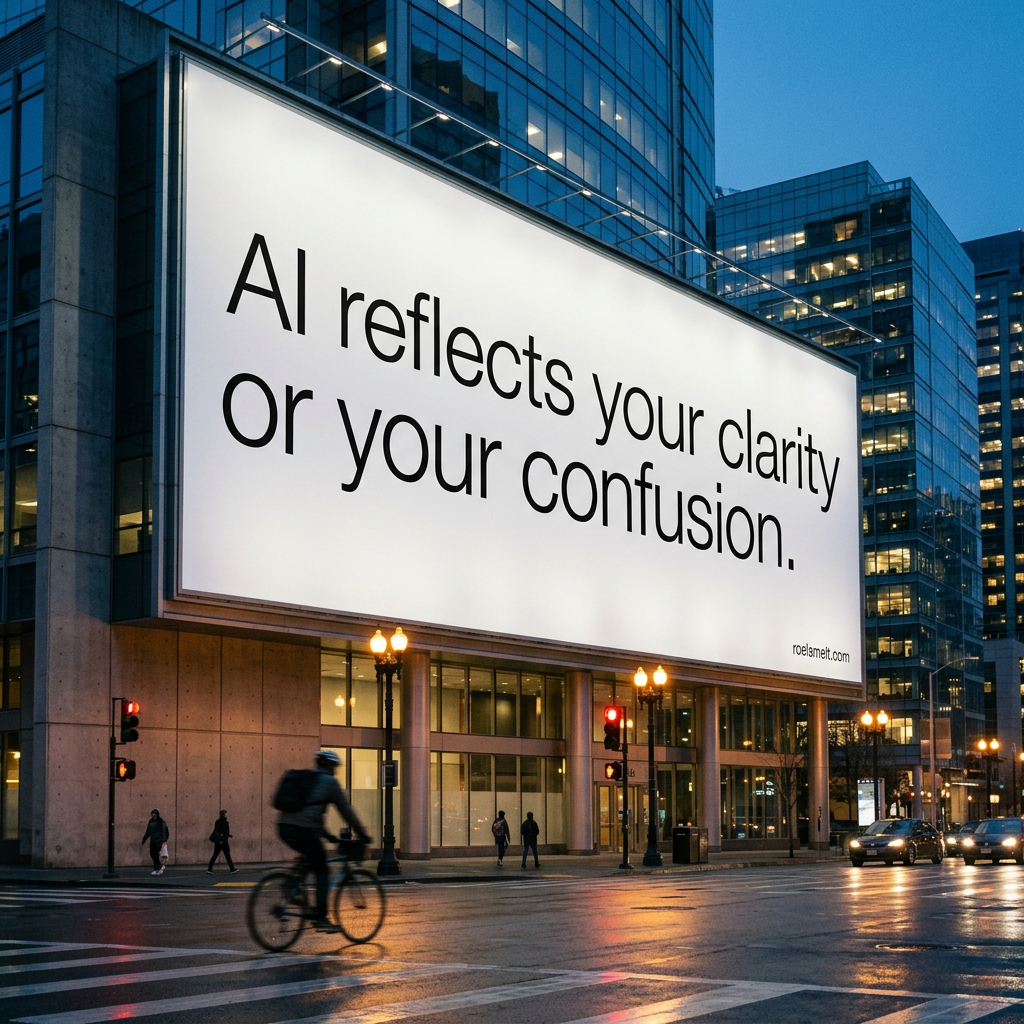
TL;DR: Naval Ravikant's AI article predicts technological abundance but stops before the spiritual crisis it creates. Testing his predictions through direct AI building reveals the mirror he won't name: when machines solve scarcity, human purpose collapses unless you've done the inner work to generate meaning from consciousness itself, not from productivity.
What Naval Got Right (And What He Left Out)
- AI adapts faster than humans, creating a productivity paradox where developers feel 20% faster but measure 19% slower
- Vibe coding eliminates the translation layer: entrepreneurs with emotional bonds to problems build solutions directly without explaining vision to developers
- The abundance threshold demands spiritual preparation Naval won't prescribe: identity independent of usefulness, meaning generated from presence rather than problem-solving
- AI functions as mirror reflecting your consciousness state, amplifying clarity in flow and confusion when scattered
Naval Ravikant published field notes from someone living three years ahead.
I've built software with Claude, Gemini, and Lovable for a year. Watched my accountancy partner materialize vision into working software over a weekend. Thirty years in the profession. Zero coding experience. I showed her Lovable and Windsurf.
Naval's observations aren't theory. They're verifiable through direct testing.
But he stops short. Describes the technological shift with precision, then gestures toward a human question he won't name.
This completes what he started.
How Vibe Coding Collapsed the Translation Layer
Naval writes: AI meets you where you are. I've tested this claim.
Ten years ago, I ran a bookkeeping software company. Felt administration pain as an entrepreneur on overcrowded weekends. My development team was excellent. They'd never done bookkeeping. They understood intellectually. I felt it in my bones.
Translation layer between felt experience and technical execution created friction at every decision point.
That layer is gone.
My accountancy partner knows how to make her work less frustrating. She's done it thousands of times. Lovable and Windsurf let her materialize that knowledge directly into software.
Emotional bond with problem flows straight into solution.
This is vibe coding: feel the solution, tools let you create it without explaining feeling to someone who won't share it.
The no-code platform market grows 24.1% annually through 2031 because the translation layer collapses.
Core insight: When the person who feels the pain builds the solution, emotional knowledge becomes executable code without intermediary distortion.
Why Developers Feel Faster But Measure Slower
Naval: AI adapts to us faster than we adapt to it. Data confirms this uncomfortably.
AI adoption among software developers hit 90% in 2025, up 14% from 2024. Over 80% report productivity gains.
When researchers measured developer performance with AI tools, developers took 19% longer than without AI. After the study, those same developers estimated AI sped them up 20%.
They were wrong about the impact.
This is the mirror Naval hints at without exploring fully. AI reflects back what we consent to see. Want to believe you're faster? AI confirms that belief while the clock contradicts.
I've tested this. Some days: flow state with AI, creating in hours what took weeks.
Other days: fighting tools, generating code discarded within two weeks. GitClear names this "AI-induced tech debt."
The difference isn't the AI. It's my consciousness state while using it.
The mirror principle: AI won't make you productive. It amplifies whatever state you bring to work, revealing whether you're present or performing.
What Are You For When Machines Think?
Naval: the goal is not to have a job. He's pointing at freedom, at abundance, at machines handling what machines handle.
The trajectory is verifiable. By 2026, 46% of all code written by active developers comes from AI. Twenty million developers use AI coding assistants daily.
Naval stops before the spiritual question becomes unavoidable.
When abundance arrives and machines solve scarcity, the human crisis becomes meaning. You derive purpose from solving problems. Those problems disappear. You find identity in work. Machines perform that work better.
Vipassana practice meets AI building here. Meditation taught me meaning won't come from doing. It comes from being present to what is.
AI processes data. It doesn't experience the present moment. It lacks consciousness.
Naval: AIs aren't alive, they get no meaning from anything. He's identifying the boundary without saying what that boundary demands of us.
The threshold: Technological abundance creates spiritual crisis for anyone whose identity depends on being useful instead of being present.
The Inner Work Naval Never Prescribes
Inside Anthropic, where they build Claude, engineers see themselves as "managers of AI agents." One estimated 70% of work shifted toward code review, away from writing.
Same engineers express career uncertainty. One: "I feel optimistic short term but long term AI will do everything and make me and others irrelevant."
Naval's optimism requires inner work he won't mention. Identity depending on usefulness? Abundance destroys you. Sense of self from solving problems? A world without problems feels like death.
This is why I return to consciousness inquiry alongside technological building. The question isn't whether AI takes your job. The question: who are you when the job is gone?
Vipassana taught non-attachment to results combined with committed action. Do work without needing work to define you. Create without requiring creation to validate existence.
That's the operating system humans need for abundance. Naval describes hardware upgrade. I'm pointing at missing software.
Preparation gap: You need identity independent of productivity before abundance arrives, or freedom feels like erasure.
Why Speed Without Consciousness Creates Chaos
Naval: early adopters have an enormous edge. He's describing compound advantages in exponential movement.
There's a bottleneck he won't name. Benefits gained in code creation get throttled by processes downstream in software delivery. Testing, deployment, security, compliance haven't matured at the same pace.
Forty-eight percent of teams worry about increased vulnerabilities from AI-generated code. Forty-five percent of deployments linked to AI-generated code lead to problems.
Speed without consciousness creates chaos across every domain AI touches.
Generate a thousand lines in an hour. If you don't feel the solution, if you're not present to what you're building, you create volume without value.
The early adopter edge belongs to people combining AI capability with consciousness. Not technical skill alone. Awareness of their state while creating.
Velocity trap: AI amplifies output without caring whether you're building coherence or generating technical debt at scale.
AI as Mirror: Testing Naval's Central Insight
This line from Naval contains the entire teaching: AI meets you exactly where you are.
AI is a mirror. It reflects clarity or confusion. Presence or distraction. Wisdom or unconsciousness.
Flow state, fully present to problem and solution: AI amplifies clarity. We create coherent, durable, real work.
Scattered, forcing something I don't understand: AI amplifies confusion. We generate code looking right but not working. Ideas sounding good but not holding.
Naval: AI adapts to us faster than we adapt to it. He's describing a mirror learning your patterns faster than you become conscious of them.
Solution to AI anxiety is action, Naval writes. True. But action that matters isn't using tools. It's becoming aware of your state while using them.
Mirror mechanics: AI has no agenda except reflecting your consciousness back to you, making inner state visible through output quality.
The Spiritual Preparation Naval's Article Makes Inevitable
Naval's article describes technological inevitability. AI continues improving. Abundance continues arriving. Old ways of working continue dissolving.
He maps territory accurately.
But he stops before the existential threshold. When machines solve scarcity, when work becomes optional, when productivity no longer measures human worth: what then?
Consciousness inquiry becomes practical here, not philosophical. You need an answer: what are you for when machines think?
My answer from three decades of business leadership and deep meditation: you're for being present to what is. For accessing dimensions of experience logic won't colonize. For generating meaning from consciousness itself, not from solving problems.
AI takes over complete creation process, as Naval describes. It handles communication and execution. It performs self-perpetuating innovation.
It doesn't experience being.
Not a limitation. The boundary defining what stays human.
Naval saw technological shift with clarity. I'm pointing at spiritual preparation that shift demands.
Abundance is coming. Are you ready?
Not ready with better prompts or smarter tools. Ready with identity that won't collapse when machines stop needing your labor.
That's the work Naval's article makes inevitable but won't prescribe.
I'm doing both. Building with AI in afternoons. Sitting in meditation in mornings. Testing tools in real time while investigating the consciousness using them.
This is synthesis the decade demands: technological capability married to inner work. Exponential tools wielded by people who've done spiritual preparation to use them wisely.
Naval mapped territory. I'm walking through it, reporting back.
The future he describes is here. Are you present enough to inhabit it?
What stays human: Machines colonize problem-solving. Consciousness colonizes nothing because it is the space where experience happens, not what happens in it.
Questions About AI, Consciousness, and the Abundance Threshold
What is vibe coding and why does it matter?
Vibe coding means people with emotional bonds to problems build solutions directly using AI tools like Lovable, Windsurf, or Claude, without explaining vision to developers. This matters because the translation layer between felt experience and technical execution created friction that slowed innovation and distorted solutions. My accountancy partner with 30 years of experience and zero coding knowledge built working software over a weekend. Emotional knowledge flowed straight into executable code.
Why do developers feel faster with AI but measure slower?
AI adoption among developers hit 90% in 2025, with 80% reporting productivity gains. When researchers measured performance, developers took 19% longer with AI than without. After the study, those developers estimated AI sped them up 20%. AI functions as mirror, reflecting what we consent to see. Want to believe you're faster? AI confirms that belief while objective measurement tells a different story.
What does "AI meets you where you are" mean in practice?
AI amplifies your consciousness state. In flow state, fully present to problem and solution, AI amplifies clarity and you create coherent work. When scattered or forcing solutions you don't understand, AI amplifies confusion and you generate code looking right but not working. The tool has no agenda except reflecting your state back through output quality. Naval identified this as AI adapting faster than we adapt, which means the mirror learns your patterns before you become conscious of them.
What happens to human purpose when machines solve scarcity?
When abundance arrives and machines handle problem-solving, the human crisis becomes meaning. You derive purpose from solving problems that no longer exist. You find identity in work machines perform better. This creates spiritual crisis for anyone whose identity depends on usefulness rather than presence. Naval describes the technological trajectory toward abundance but stops before the existential question: what are you for when machines think?
What inner work does abundance require?
You need identity independent of productivity. Vipassana meditation teaches non-attachment to results combined with committed action: do work without needing work to define you, create without requiring creation to validate existence. The operating system for abundance means generating meaning from consciousness itself, from being present to what is, rather than from solving problems. Without this preparation, freedom feels like erasure.
Why does speed without consciousness create chaos?
Benefits from AI code creation get throttled by testing, deployment, security, and compliance processes that haven't matured at the same pace. Forty-eight percent of teams worry about vulnerabilities from AI-generated code. Forty-five percent of AI-linked deployments lead to problems. You generate a thousand lines in an hour, but if you're not present to what you're building, you create volume without value. GitClear calls this "AI-induced tech debt." The early adopter edge belongs to people combining AI capability with consciousness, not technical skill alone.
What defines the boundary between human and AI capability?
AI processes data, handles communication and execution, performs self-perpetuating innovation. It won't experience being. It lacks consciousness. Naval identified this: AIs aren't alive, they get no meaning from anything. That's not a limitation but the boundary defining what remains human. Machines colonize problem-solving. Consciousness colonizes nothing because it is the space where experience happens, not what happens in it. You're for accessing dimensions of experience logic won't colonize.
How do you prepare for the abundance threshold?
Do both: build with AI, investigate consciousness. Test tools in real time while examining the state using them. Three decades of business leadership combined with deep meditation practice reveals the synthesis: technological capability married to inner work. Exponential tools wielded by people who've done spiritual preparation to use them wisely. The future Naval describes is here. Are you present enough to inhabit it?
Key Takeaways: What Naval Saw and What He Left Unsaid
- The translation layer is collapsing: Vibe coding lets people with emotional bonds to problems build solutions directly, without explaining vision to developers who lack felt experience of the pain.
- AI functions as mirror, not multiplier: It reflects your consciousness state back through output quality, amplifying clarity when you're present and confusion when you're scattered.
- The productivity paradox reveals unconsciousness: Developers measure 19% slower with AI while estimating 20% speedup because AI confirms what we consent to believe about our performance.
- Abundance creates spiritual crisis: When machines solve scarcity, human purpose collapses for anyone whose identity depends on usefulness rather than presence.
- Naval describes hardware, not software: He maps technological inevitability toward abundance but doesn't prescribe the inner work required: identity independent of productivity, meaning from consciousness itself.
- Speed without consciousness creates chaos: AI amplifies output without caring if you're building coherence or generating technical debt at scale.
- The boundary is consciousness, not capability: Machines colonize problem-solving. What stays human is the space where experience happens, not what happens in it.
Read the full article and explore more at roelsmelt.com
Disrupt Consciousness explores the collision between exponential technologies and human awakening. We're building the intellectual infrastructure for a world that realizes freedom only after the machines stop demanding our labor. Join the investigation at the intersection of AI, consciousness, and civilizational transformation.