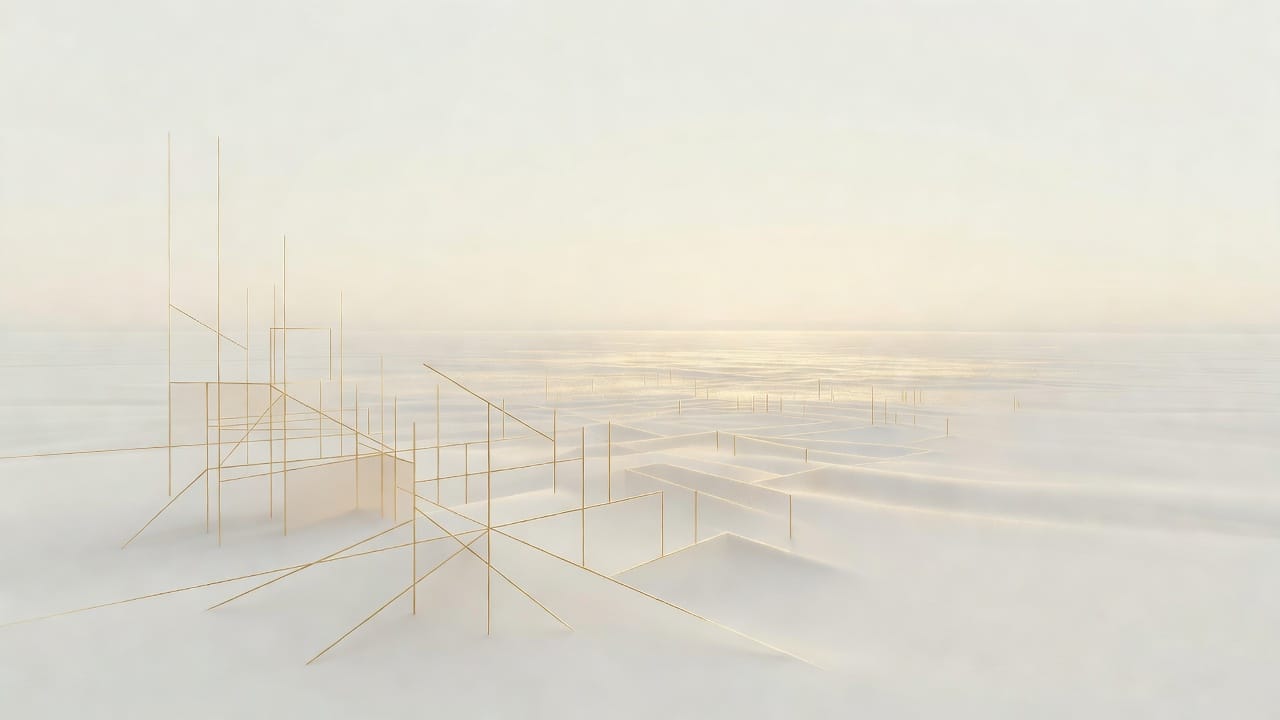
Fear mobilizes. Emergency becomes architecture. The adult position is harder: we do not know — so no one gets unlimited power. Humility, sunset clauses, and awe before the order we do not own.
There is a temptation, once you see through a moral panic, to switch camps. From believer to denier. From savior to scoffer. From Club of Rome to contrarian certainty. From An Inconvenient Truth to “nothing to see here.”
That temptation is understandable. It is also too small.
Because the deeper realization is not that one side finally won. The deeper realization is this: we do not know. And much of modern power is built on pretending that we do.
For years I was moved by the great warning stories. In the 1980s, the Club of Rome: limits, collapse, systems too large for human arrogance. In the 2000s, Al Gore’s An Inconvenient Truth: graphs, glaciers, moral urgency, the feeling that seriousness itself required alarm. Those stories impressed me because they touched something real — responsibility, care for the future, refusal of shallow optimism.
But later another pattern became visible. Not only in climate. In nuclear dread. In pandemic politics. In misinformation crusades. In the permanent language of emergency.
Fear mobilizes. Mobilization creates emergency measures. Emergency measures become institutions. And institutions, sooner or later, begin to need the emergency.
That is not always a conspiracy. It is often more banal than that.
Fear rarely needs a villain
The people most sensitive to catastrophic narratives are often not cynics. They are sincere. They want to protect children, prevent collapse, stand on the side of science and compassion and the future. They do not sit in rooms saying, “Let us invent fear so we can rule.”
The fear leads. The process follows.
This is closer to Hannah Arendt than to cartoon villainy. The banality of evil is not only the clerk who stamps papers for a monstrous regime. It is also the well-intentioned modern person who cannot tolerate uncertainty, and therefore builds machinery to abolish it.
Fear does not need a mastermind. It only needs a vivid threat, a moral costume, a technical class ready to manage, and a public too unsettled to demand limits. Then temporary buildings appear. And temporary buildings have a habit of becoming permanent.
I always think of the emergency classrooms at secondary school. Thrown up for a while. Still there years later. No longer an exception. Just part of the architecture.
That is Hayek’s world — not because every planner is wicked, but because processes have consequences beyond intentions.
Once emergency power exists, it stays
Hayek is often flattened into a market slogan. His deeper point is colder and more important: once power is created for emergency, it rarely remains confined to emergency.
A crisis justifies discretion. Discretion justifies expertise. Expertise justifies permanence. Permanence starts looking for the next crisis that will keep it necessary. Nobody has to plot this. It happens.
The dashboard becomes more real than the field. The model becomes more sacred than humility. The institution becomes the thing that must be saved, even after the original fear has changed shape. That is why “we must act now” is such a dangerous sentence when it comes without sunset clauses, without falsifiability, and without the right to dissent. The act becomes a building. The building becomes a constituency. The constituency becomes a theology.
The other trap
There is a real risk on the other side. If you wake up from alarmism, you can fall into denial as identity. That helps no one.
It is possible that climate systems contain thresholds we poorly understand. It is possible that business-as-usual creates cascading harm. It is possible that some fears are exaggerated and still point at something real. It is possible that adaptation matters more than ritual sacrifice. It is possible that both panic and complacency are forms of false certainty.
We do not know in the way politics pretends to know. That sentence is not weakness. It is adult epistemology.
The fanatic says science has proven that his faction must rule. The contrarian fanatic says science has proven that nothing serious is happening. Both are magicians. Both need more certainty than reality is offering. Both turn not-knowing into a moral failure instead of a discipline.
The magician
The magician is not merely the person with wrong data. The magician is the person who cannot live without the feeling of command. He needs to know. He needs to steer. He needs the world to be legible enough that his fear can become a plan, and his plan can become virtue.
Modern culture rewards this posture. We are trained to believe that intelligence means prediction, management, control; that not-knowing is embarrassing; that uncertainty is a hole to be filled by policy. But there are domains where the claim “we know” is itself the beginning of violence. Once you know absolutely, dissent becomes sabotage. Delay becomes guilt. Humility becomes betrayal. Emergency becomes home.
Real maturity — political and spiritual — begins one step further.
We do not know — and therefore no one gets unlimited power.
Not the denier. Not the savior. Not the model. Not the ministry. Not the movement.
What is missing
What is missing from so much public life is not more intensity. Not more slogans. Not more sacred graphs, and not more counter-sacred graphs either.
What is missing is the public dignity of not-knowing. And with it, a harder institutional ethic: emergency must not be allowed to become architecture.
If a measure is justified by crisis, it should die with the crisis. If an office is born from exception, it should face extinction by default. If a narrative demands obedience, it should be forced to survive contact with doubt. Institutionalization is not neutral. Unexamined institutionalization is one of the great modern evils, precisely because it feels responsible while slowly replacing living judgment with permanent machinery.
This does not mean “no institutions.” It means no immortal emergencies, no sacred dashboards, no blank checks issued by fear, and no priesthood of people who cannot say “we might be wrong.”
The task is not only to build under pressure. The task is to actively dismantle what fear made permanent.
Beyond the magician
And then there is a deeper layer still. Beyond climate camps. Beyond Hayekian institutional critique. Beyond even epistemology.
There is surrender.
Not the surrender of the defeated. The surrender of the person who finally stops trying to be the author of the whole. Here the lucid mystic and the deep believer meet. Eckhart Tolle and the old saints are closer than modern discourse admits. Both, at their best, arrive at the same naked place:
I do not know. I am not the center. There is a larger order, presence, God, Being, creation — call it what you must — that exceeds my grasp. My task is not to dominate it. My task is to live truthfully inside it.
This is awe.
Awe at the great, unmasterable pattern. Awe that makes the nervous system quieter. Awe that makes gratitude possible. Awe that creates resilience: the ability to work with what is given, instead of raging at reality for not conforming to the plan.
This is not passivity. It is the end of magical politics. The magician wants salvation through control. The humble human wants fidelity under uncertainty. One produces permanent emergency. The other produces character.
Bring it home
So the position is not “nothing is dangerous.” And not “everything is catastrophe, so obey.”
The position is simpler and harder.
Fear will always try to organize us — often sincerely, often banally, often through people who think they are saving the world. If we are not careful, temporary shelters become the city. Models become idols. Uncertainty becomes intolerable. And power learns to speak in the voice of compassion while forgetting the limits of knowledge.
The antidote is not numbness. It is a harder triad:
Humility before what we do not know. Hostility to emergency that refuses to die. Awe before the larger order we do not own.
That triad makes a freer human — not freer because he found a better faction, but freer because he stopped needing to play God in order to feel safe.
We do not know.
That is not the end of responsibility. It is the beginning of a saner one.
Work. Build. Adapt. Protect. Love. Measure. Doubt. Repair.
And leave no temporary building standing long enough to pretend it was always meant to be the temple.