Humanoid Robots and the Path to a New Future: Netflix or Enlightenment?
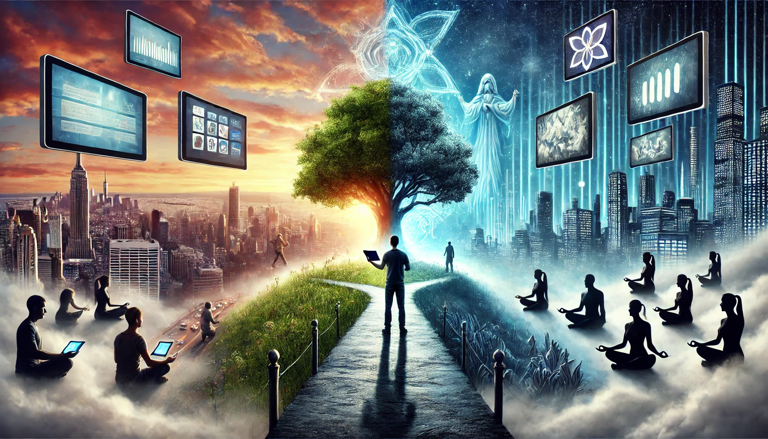
The future hinges on a crucial decision: will we use the freedom granted by humanoid robots to evolve, or will we sink into a mindless stupor of endless entertainment?
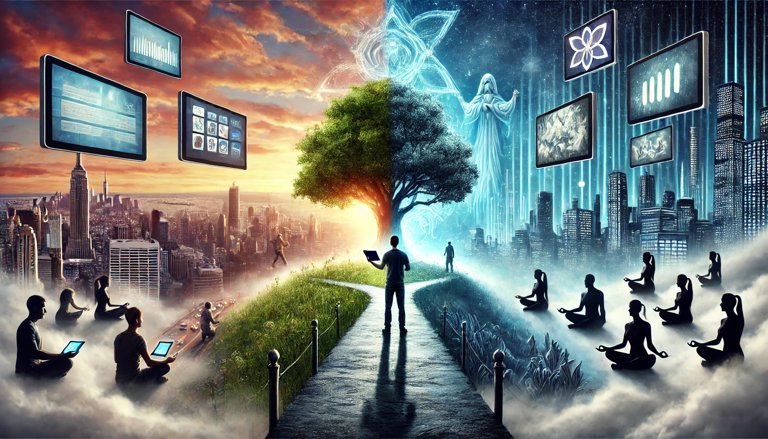
Let’s imagine a world where most people choose the latter. It could mirror *1984*, where people are numbed and controlled by constant surveillance, a suppression of individuality, and a state-engineered form of reality. George Orwell’s dystopia warned us about a society where every aspect of life is manipulated to maintain the status quo. In *1984*, the characters live in a world where love and personal connections are co-opted and repressed, leaving individuals in a mechanical existence devoid of real meaning. If we lose ourselves to binge-watching and doomscrolling, we risk becoming like the drones of *1984*—passive, disengaged, and manipulated by the forces that design our digital lives. Freedom would no longer be something to aspire to; it would dissolve in the comfort of convenience.
Contrast this with *Wall-E*. In this narrative, humanity has drifted into a kind of lazy oblivion, floating in chairs while machines do everything. Yet, even here, there’s hope. The discovery of a plant—a small symbol of life—becomes the turning point. The humans return to Earth to cultivate and reconnect with the planet. It’s a reminder that meaning often lies in simple, life-affirming acts like nurturing, caring, and growth. The plant is symbolic of a deeper purpose: reconnecting with nature, each other, and something beyond materialism.
But *1984* and *Wall-E* are not just cautionary tales. They reflect two paths humanity might take as humanoid robots enter our lives. In *Wall-E*, people find meaning in a growing plant, a reconnection with life, while in *1984*, control and manipulation smother love and authenticity. If we choose the path of distraction and endless consumption, we risk turning into passive consumers of a reality designed by algorithms, much like the dystopian future Orwell described.
The Coming Disruption: A Summary of Tony Seba’s “We Are the Horses”
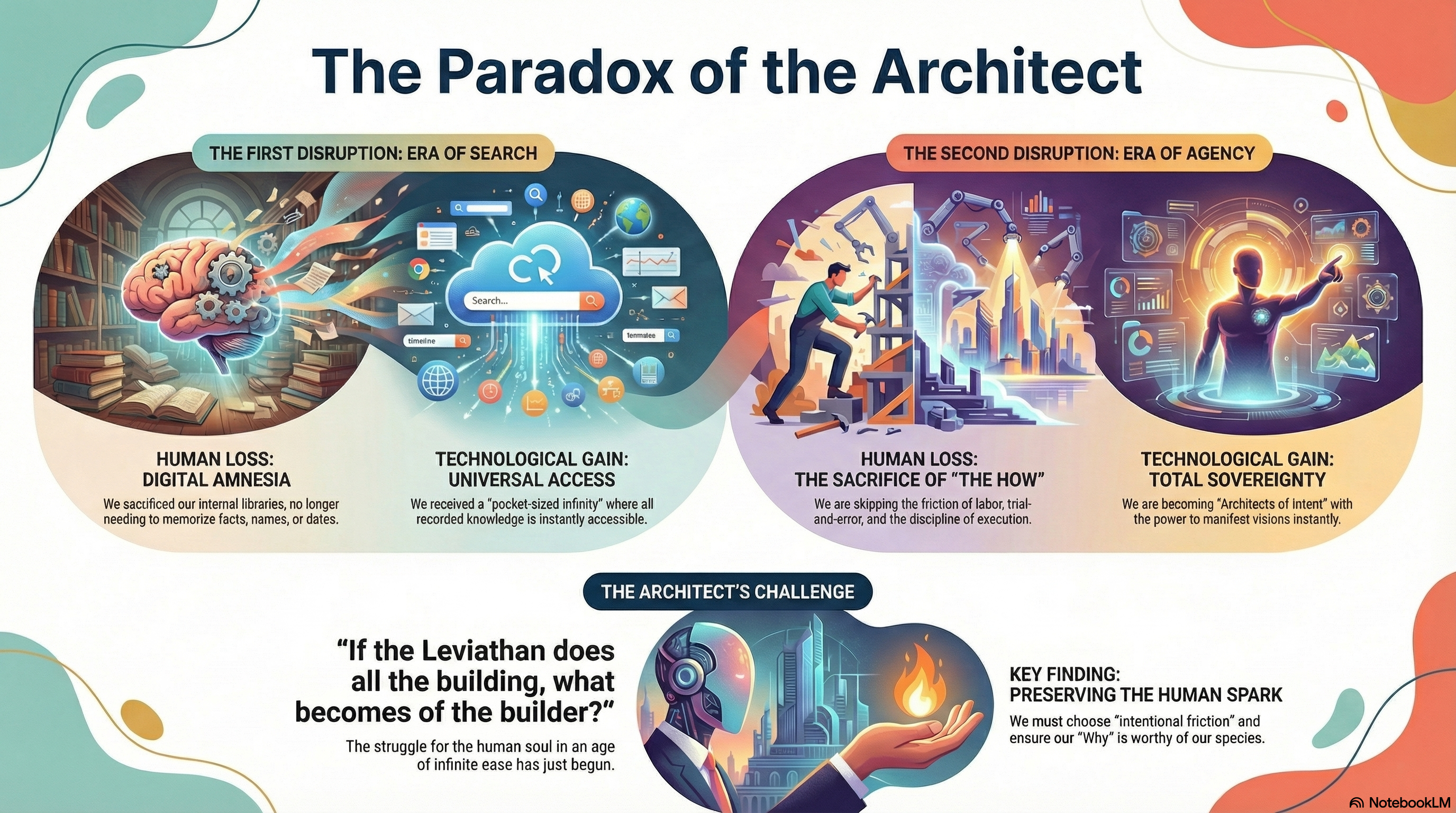
Tony Seba’s article, *"We Are the Horses,"* explains how humanoid robots will usher in a massive disruption, similar to the way cars replaced horses in the early 20th century. Humanoid robots will take over labor-intensive and cognitive tasks across industries, bringing deflationary pressures, increasing productivity, and creating a surplus of time and prosperity for humanity. As robots handle more work, people will have unprecedented freedom to seek meaning, develop their consciousness, and potentially evolve into a higher state of being.
This disruption is unavoidable. In the same way horses became obsolete in the face of motorized vehicles, many human jobs will be rendered redundant by machines that don’t tire, don’t make mistakes, and continuously improve. But, unlike *1984*—an era where freedom was suppressed through corporate and governmental structures—humanoid robots will offer humanity a new level of freedom, prosperity, and time. The critical question is: What will we do with it?
The Future Hinges on Our Choices
The decision before us is clear. Do we squander this freedom on distraction, or use it to engage in personal growth and the search for meaning? The danger, as we’ve seen in *Wall-E*, is that AI and digital platforms could keep us hooked. Algorithms are designed to capture and hold attention, much like the endless cycle of entertainment that renders the characters in *Wall-E* inert. The system doesn’t need you to think critically or act purposefully; it just needs you to stay engaged, passive, and compliant.
In contrast, the potential for growth is immense. If we choose the path of enlightenment, we can step away from the endless distractions and instead dive deeper into developing our consciousness. The time freed by humanoid robots could be used to reconnect with nature, explore philosophy, or follow the teachings of spiritual leaders like Buddha and Eckhart Tolle. In a world where work is no longer an obligation, the search for meaning becomes the new frontier. As Tolle points out, true fulfillment comes not from external achievements but from an inner awakening.
In *1984*, love is the one thing that cannot be fully controlled by the Party, hinting that even in the most oppressive regimes, authentic human connection and purpose can be found. Love, much like the growing plant in *Wall-E*, offers a glimpse of meaning that transcends the material. If we allow ourselves to drift into the algorithmic comforts of AI and humanoid robots, we may lose sight of this deeper meaning. However, if we harness the freedom and prosperity these machines offer, we have the chance to pursue love, connection, and consciousness on a much larger scale.
The future hinges on this choice: to become passive consumers in a *1984*-style dystopia or, like in *Wall-E*, to rediscover purpose, growth, and life itself.